blog
The “best” peptides for bodybuilding
Nov
The “best” peptides for bodybuilding? What the research actually says
Bodybuilding is one of the areas in which dietary supplements, anabolic steroids, SARMs and other performance-enhancing products (PEDs) are openly discussed and widely used.
It is therefore not surprising that the peptides for bodybuilding They are also a subject that regularly sparks much debate among practitioners of all levels. Discussions surrounding peptides generally focus on their potential influence on tissue repair, body composition, metabolic pathways, recovery, and growth hormone signaling, to name just a few of the topics frequently discussed in bodybuilding communities.
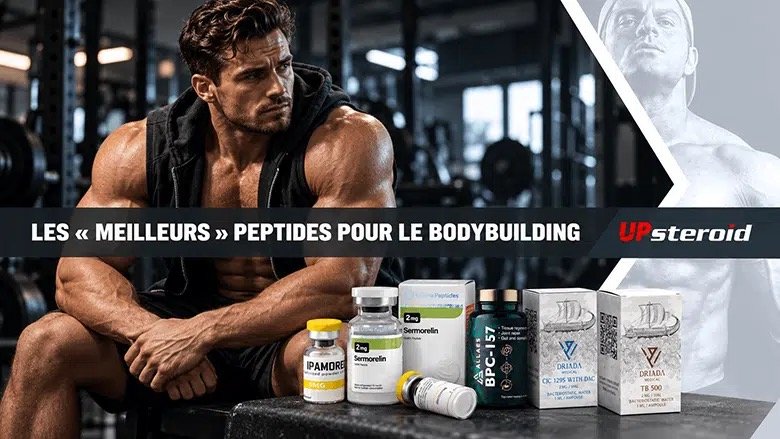
Peptides for bodybuilding that regularly come up in these discussions include: AICAR, TB-500, Sermorelin, BPC-157, CJC-1295 and Ipamorelin.
However, it would be misleading to think that these six peptides all belong to a single category, as the quality of available research, their mechanisms of action, their potential applications, and even their current regulatory status are very different.
In fact, a 2026 review dedicated to peptides used in bodybuilding and their application in sports revealed that peptides such as Sermorelin, CJC-1295 and Ipamorelin are widely promoted in bodybuilding communities for their potential in recovery, fat metabolism and muscle growth, although clinical evidence regarding their use to enhance performance remains relatively limited.
It therefore goes without saying that the question of which peptide for bodybuilding is “the best” shouldn’t really arise. It’s more important to understand how these peptides, individually and collectively, especially when combined in a stack, can potentially contribute to improving the physique and performance of users.
1. Sermorelin
The Sermorelin is a peptide that mimics the growth hormone-releasing hormone, or GHRH, by promoting the increase in the secretion of endogenous growth hormone by the pituitary gland.
In the world of bodybuilding, the Sermorelin for muscle growth is experiencing increasing interest, mainly due to the influence attributed to this peptide on metabolism, tissue growth, IGF-1 and growth hormone.
Sermorelin has a short half-life of between 10 and 20 minutes. Although some anecdotal claims attribute to it potential benefits for promoting lean mass, increasing strength, improving the immune system, promoting better sleep, stimulating protein synthesis and accelerating recovery, these claims should be distinguished from the available scientific evidence.
Sermorelin comes in powder form and must be reconstituted with bacteriostatic water.
According to statements from bodybuilders reported in the document, the usual dosage would be between 200 and 1000 mcg per day, with a minimum of one injection before bedtime or three injections spread throughout the day according to the recommended cycle and dosage protocols.
2. Ipamorelin
The’Ipamorelin is presented as a growth hormone secretagogue that acts via ghrelin receptor-related pathways to promote the release of growth hormone (GH), which is involved in the repair of damaged muscle tissue.
Ipamorelin is also considered to promote good sleep quality and thus contribute to improved overall recovery.
Bodybuilders also claim that Ipamorelin stimulates protein synthesis, primarily due to its purported ability to increase IGF-1 and GH signaling.
Furthermore, Ipamorelin is presented as being able to promote metabolism and fat loss, since lipolysis can be influenced by the stimulated release of GH.
Furthermore, the IGF-1 and GH pathways are thought to participate in tissue and collagen remodeling, thus contributing to the support of connective tissues.

3. CJC-1295
The CJC-1295 is generally described as a long-acting analogue of growth hormone-releasing hormone, or GHRH, which interacts directly with the endocrine system to significantly increase the release and circulation of IGF-1 and GH hormones, with effects that could last for several days.
Regarding the benefits of the CJC-1295 peptide for bodybuilding, the increased release of IGF-1 and GH would likely promote faster recovery and support the development of lean muscle mass.
In addition, CJC-1295 is said to promote fat metabolism in a similar way to Ipamorelin, with lipolytic effects potentially contributing to fat loss.
CJC-1295, like Ipamorelin, may also promote connective tissue remodeling and help improve sleep patterns.
In reality, the CJC-1295 and the Ipamorelin They have many things in common, the main difference being in the ways in which they act.
Bodybuilders, however, frequently discuss the potential benefits of combining these two peptides in a bodybuilding stack.
4. BPC-157 and TB-500
The BPC-157 is quite different from GH-related peptides used in bodybuilding.
BPC-157 is primarily discussed among bodybuilders seeking a peptide that can accelerate recovery, whether during an ongoing training program or during an off-season period.
BPC-157 is considered to be able to promote the repair of musculoskeletal tissues, muscles, ligaments and tendons.
For its part, the TB-500 is a derivative closely associated with thymosin beta-4. Like BPC-157, this peptide is presented as being able to promote angiogenesis, recovery and tissue repair.
Together, the BPC-157 and the TB-500 constitute what is commonly called the «”Wolverine Stack”», presented as aiming to enhance the potential effects on repair, recovery and connective tissues.

5. AICAR
It must be stated from the outset that the’AICAR is not technically a peptide and that it is still considered an experimental compound.
As a pharmacological compound, AICAR is presented as being able to increase the activity of the’AMPK, while improving glucose absorption and insulin sensitivity.
In addition, AICAR could stimulate energy expenditure and fat oxidation.
Bodybuilders also claim that, through certain metabolic adaptations, AICAR could improve endurance levels.
Conclusion
Qualify peptides Presenting these products as “better” peptides for bodybuilding would ultimately not be entirely accurate, as many of the benefits attributed to them are based on anecdotal claims from bodybuilders and are not necessarily supported by research or scientific evidence.
However, this does not mean that these claims should be automatically dismissed, especially since some are based on several years of use by a significant number of bodybuilders and certain recurring trends in these testimonials may suggest a certain level of plausibility regarding the peptides mentioned in this article.
For example, peptides CJC-1295, Ipamorelin and Sermorelin are now widely known in bodybuilding communities for their influence on IGF-1 and GH, with goals related to muscle growth.
For their part, the BPC-157 and TB-500, also known as “Wolverine Stack”, are considered by their users to be potentially interesting peptides for promoting connective tissue repair, recovery and tissue repair.
As for the’AICAR, which is not technically a peptide, it is a metabolic compound associated with glucose uptake and insulin sensitivity via AMPK-related mechanisms.
Ultimately, if you are considering using peptides during your bodybuilding journey, it is advisable to take the time to study both the available scientific evidence and anecdotal claims in order to have as complete a view as possible before making a choice.
